WordPress Multisite Development Toronto
WordPress multisite development puts several brands, sites or departments on one WordPress installation with shared users, plugins and governance. I plan domain mapping, user roles and shared plugins before the build starts, because that decision sets your maintenance cost for years. I have delivered this for Great-West Life, Canada Life, London Life and the Ministry of Education Ontario.
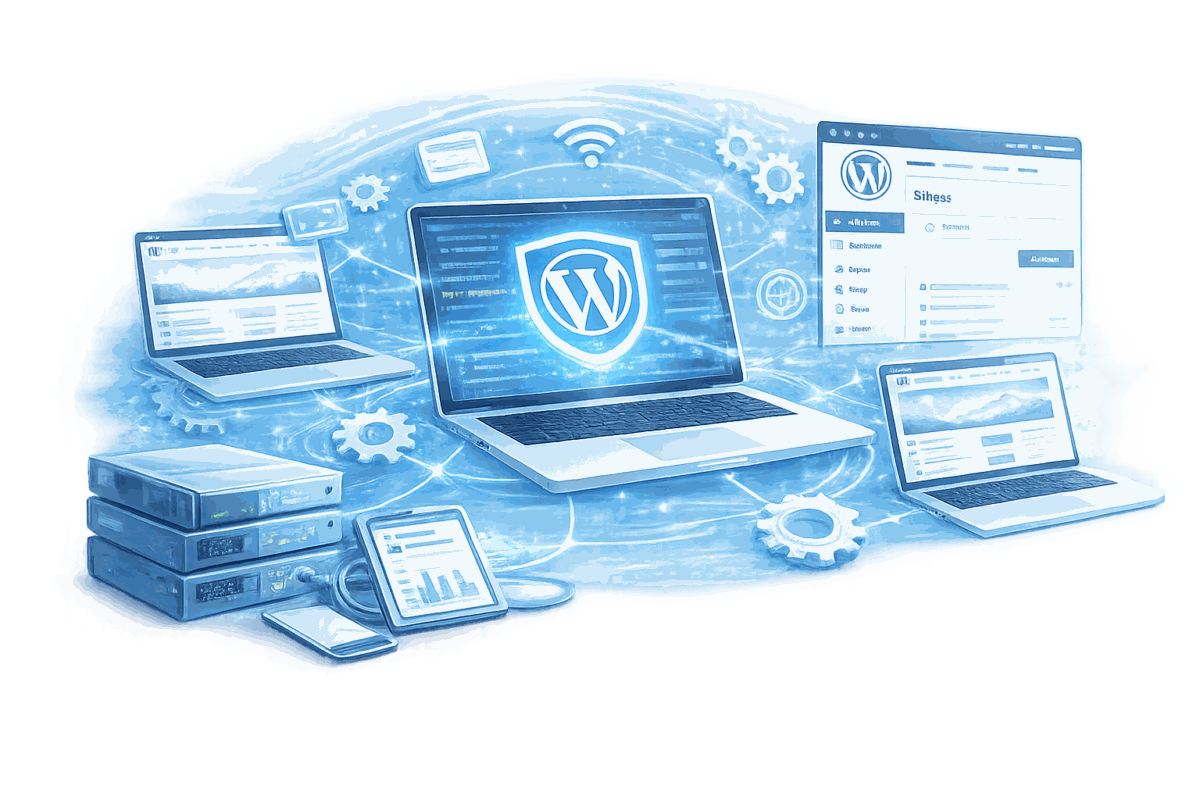
Enterprise Multisite at the Scale Most Toronto Developers Have Never Seen
Delivered for Great-West Life, Canada Life, London Life, and Ministry of Education Ontario
Great-West Life, Canada Life, and London Life operated as distinct brands under a shared WPML bilingual architecture - one network, three brands, EN/FR compliance built in. The Ministry of Education Ontario required bilingual content management across two platforms, both of which passed Ontario government IT security review. These are enterprise Multisite networks in production. Not a demo environment.
One Update Cycle Replaces Five Separate Maintenance Obligations
Five sites means five separate plugin update cycles - five opportunities for an update to break something in production. WordPress Multisite eliminates that. One update cycle. One security monitoring obligation. One backup protocol. Shared code where sharing makes sense, independent content and branding where independence is required.
Multisite With WPML - Bilingual at Network Scale
WPML integrates with WordPress Multisite to provide bilingual or multilingual content management across the network. I have delivered WPML bilingual Multisite at national scale for Great-West Life and the Ministry of Education Ontario - both under Canadian bilingual compliance requirements.
Architecture Decisions That Cannot Be Reversed Later - Made Correctly at Setup
The subdomain vs subdirectory decision, for example, is very difficult to reverse once the network is live and indexed by search engines. The discovery and architecture review phase of my engagement process exists specifically to prevent this. If Multisite is not the correct architecture for your requirements, I will tell you - and explain why.

Role-Based Access Control - Central Brand Control With Local Editorial Independence
Franchisees cannot install unapproved plugins. They cannot modify the global header or footer. They can publish the content they are supposed to publish - and nothing else. The boundary is enforced at the architecture level, not by a policy document.
The Munich Re Standard Applied to Every Multisite Build
The staging discipline and documentation standard that Munich Re required applies to every Multisite network I build. Munich Re's IT security team ran penetration tests and automated security scans on the platform. It passed. Plugin vetting, staging validation before network-wide updates, and a documented rollback process are non-negotiable for enterprise networks.
How a WordPress Multisite Engagement Works
Discovery and Network Architecture Mapping
We document every site in the intended network: content type, editorial team structure, branding requirements, shared vs independent elements, user role requirements, bilingual obligations, and compliance constraints. This document becomes the architecture specification.
Architecture Decision and Written Recommendation
Based on discovery: Multisite or separate sites, subdomain vs subdirectory structure, plugin stack, theme architecture, and user role configuration. Written recommendation with reasoning. If Multisite is not the right call, this is where we determine that.
Staging Network Build With Performance and Security Hardening
Full Multisite network built on staging. Every site configured, themed, and tested. Object caching, database query optimization, network-level security hardening, and plugin audit completed before production deployment.
Production Deployment, Documentation, and Ongoing Maintenance
Deployment follows a documented protocol. Domain mapping configured and tested. DNS validated. Editorial teams and network administrators both receive documentation before project close. Ongoing maintenance retainer available - see the retainer section for terms.
What Should You Know About WordPress Multisite Development Toronto?

Managing Five Separate WordPress Sites Is Not a Scaling Strategy
Five sites means five separate plugin update cycles, five separate user databases, five separate security monitoring obligations, five separate backup protocols. WordPress Multisite exists to solve this problem. One installation. One update cycle. One security monitoring obligation. Shared code where sharing makes sense, independent content and branding where independence is required.

Multisite Is Not the Correct Architecture for Every Situation - Knowing the Difference Matters
A developer who recommends Multisite for every situation does not understand the tradeoffs. A developer who recommends against Multisite for every enterprise situation does not understand the architecture. The strategy call is where we determine which architecture is right for your specific situation. If Multisite is not the correct answer, I will tell you - and explain why.
Enterprise Multisite Problems Are Different From Small-Scale Multisite Problems
Most WordPress developers have configured a Multisite installation. Fewer have delivered one for a national media brand, a multi-brand financial services group, or a provincial government ministry. The difference is what happens when the network grows to twenty sites, when a plugin update breaks three simultaneously, or when the IT security team asks for a documented audit trail of every change made to the network in the past six months.

The Role-Based Access Decision Determines How Much Time Editorial Teams Spend With IT
A well-configured Multisite network gives editorial teams everything they need and nothing they should not touch.
Franchisees can update their own content, upload approved image assets, and manage their own user accounts. They cannot install plugins, modify the shared theme, or access content from a sibling site. Those restrictions are configured at the network administrator level - not enforced manually by someone in IT.
When the permissions are wrong, the alternative is an IT ticket every time a content editor needs to do something the network administrator did not anticipate. The access control configuration is a time-cost decision made at setup with compounding consequences every month after.
Event Microsites Are the Clearest Multisite Use Case in Media
Three brands under one network. Great-West Life, Canada Life, and London Life each had their own branded presence, their own editorial teams, and their own bilingual content workflows - managed from a single WordPress installation. Brand parity enforced at the architecture level. No three separate update cycles. No three separate plugin stacks to keep in sync.

Compliance Consistency Across the Network Is a Multisite Advantage for Regulated Industries
For financial services organizations, the additional benefit of Multisite is compliance consistency. Security hardening, PIPEDA data handling configurations, and plugin vetting happen once at the network level - not separately on each brand site with the risk of inconsistency. Great-West Life, Canada Life, and London Life on a shared architecture is the proof of concept.
What a WordPress Multisite Engagement Delivers

Network Architecture Specification Based on Your Actual Requirements
Every site in the intended network documented: content type, editorial team structure, branding requirements, shared vs independent elements, user role requirements, bilingual obligations, compliance constraints. This document becomes the architecture specification - not a verbal summary from a kickoff call.
A Written Architecture Recommendation - Multisite or Separate Sites, With Reasoning
Based on discovery: Multisite or separate sites, subdomain vs subdirectory structure, plugin stack, theme architecture (shared parent theme with child themes per site, or separate themes), user role configuration. If Multisite is not the right call for your situation, this is where we determine that - before any build begins.

Full Network Built on Staging - With Editorial Team Testing Before Launch
Every site in the network is configured, themed, and populated with representative content on staging. Role-based access is tested with actual editorial team members where possible. WCAG, bilingual, and security requirements are validated at this stage - not after launch when remediation is expensive.

Performance and Security Hardened Before Production
Multisite networks have specific performance and security considerations that single-site installations do not. Object caching, database query optimization, network-level security hardening, and plugin audit are completed on staging before any production deployment.

Editorial Team and Network Administrator Documentation
Every editorial team that will manage a site in the network receives documentation written for their specific role. Network administrators receive a technical operations guide. Both documents exist before the project closes - you are not dependent on me to train new staff.
Ongoing Maintenance Retainer at a Fraction of the Cost of Managing Separate Sites
Multisite networks require ongoing plugin update management, compatibility testing before network-wide updates, new site provisioning, and performance monitoring. The retainer covers all of this at a fraction of the cost of managing separate sites individually. 6-month minimum.
WordPress Multisite Use Cases
Which organizations get the most from Multisite architecture:
Media Companies and Publishers
Multiple editorial brands, regional editions, or bilingual platforms. Great-West Life ran three distinct brands under one network. Ministry of Education Ontario ran two bilingual government platforms under one IT security review.
Multi-Brand Corporate and Financial Services
Great-West Life, Canada Life, London Life, and Lifeco on a shared WPML multilingual architecture. Compliance consistency - security hardening and PIPEDA configurations - enforced once at the network level.
Educational Institutions and Government
Departmental or program sites consolidated under a single network. IT controls the platform. Departments control their content. WCAG and security enforced at the network level.
Franchise Networks
Central brand control with local content customization. Franchisees cannot install unapproved plugins or modify global brand elements. Enforced at the architecture level.
White-Label Agency Portfolio Management
Single management interface for all client sites. Shared maintenance overhead. Consistent security baseline. Available with NDA, no client poaching.
Multisite With WPML Bilingual
EN/FR and multi-locale deployments across the network. Delivered for Great-West Life and the Ministry of Education Ontario under Canadian bilingual compliance requirements.
Migration From Separate Sites to Multisite
Technically possible and I have done it. Complexity depends on site size, plugin stack, URL structure, and SEO implications. Always easier to build Multisite from the start - but migration is a viable path.
Ongoing Multisite Maintenance Retainer
Plugin update management, compatibility testing before network-wide updates, new site provisioning, performance monitoring. 6-month minimum.
Enterprise Multisite Results: Great-West Life, Canada Life, London Life, and Ministry of Education Ontario
Great-West Life, Canada Life, London Life - Three Brands, One Multisite Network
Three distinct insurance brands. Each with its own branded WordPress presence. Each with bilingual EN/FR content requirements. All managed from a single Multisite network with WPML.
The architecture challenge: brand independence at the front end, shared platform discipline at the back end. Editorial teams for each brand work in their own space without touching platform settings. Plugin updates and security patches deploy once - not three times.
This is the operational case for enterprise Multisite. Not three separate installs maintained by a team that is always behind. One network.
Ministry of Education Ontario - Bilingual Government Multisite
The Ministry of Education Ontario engagement included two platforms on the same network: the Compass bilingual newsletter system and the Employment Ontario Portal, delivered in partnership with the Ministry of Training, Colleges and Universities.
Both platforms required EN/FR bilingual content management built to Ministry editorial workflows. Content editors published in both languages without a developer present. Language parity enforced at the architecture level.
Both platforms passed Ontario government IT security review. That is the documented standard for government WordPress Multisite.
Sportsnet and Rogers - Event Microsites at Media Scale
Rogers and Sportsnet ran WordPress event microsites for major sports events. Microsites that needed to go live quickly, carry significant traffic, and come down cleanly after the event.
Multisite made the repeated build faster - shared hosting infrastructure, shared theme and plugin stack, shared SSL configuration. A new subsite could be spun up from the network administration panel in minutes rather than provisioned as an entirely separate WordPress installation.
That operational efficiency - when event microsites need to launch on deadline with no margin for provisioning delays - is where the Multisite architecture pays its cost.
Munich Re - Enterprise Network Governance Under Real IT Scrutiny
Munich Re brought me in as senior WordPress developer and lead on a project where the IT team ran real security reviews. Not a scan report submitted after launch - an active review of the codebase, the deployment workflow, and the plugin audit before a single line reached production.
On a Multisite network, that review covers the entire network, not just the active site. Plugin installations affect every site on the network. A security gap in a rarely-visited subsite exposes the entire installation.
The documentation standard I developed for that engagement - covering every plugin, every role assignment, every deployment step - is the governance model I carry into every Multisite build.
Frequently Asked Questions About WordPress Multisite Development Toronto
WordPress Multisite is a native WordPress feature that allows a single WordPress installation to power a network of multiple sites. Each site has its own content, design, and editorial team, but shares a single codebase, plugin installation, and user authentication system with all other sites in the network. The practical difference from separate sites is maintenance efficiency: plugin updates, security monitoring, and platform management happen once at the network level, not separately for each site.
Yes. WordPress Multisite supports both subdomain mapping (brand.organization.com) and custom domain mapping (brand.com) for each site in the network. The correct approach depends on your branding requirements, SEO strategy, and IT infrastructure. Both configurations are supported and the recommendation depends on your specific situation.
Yes. WPML integrates with WordPress Multisite to provide bilingual or multilingual content management across the network. Each site in the network can operate in its own language or support multiple languages with synchronized content. I have delivered WPML bilingual Multisite at national scale for Great-West Life and the Ministry of Education Ontario - both under Canadian bilingual compliance requirements.
The main risk of Multisite is that a plugin or theme conflict affects all sites in the network simultaneously, not just one. This is why plugin vetting, staging validation before network-wide updates, and a documented rollback process are non-negotiable for enterprise Multisite networks. The second risk is incorrect architecture at setup - a subdomain vs subdirectory decision, for example, is very difficult to reverse once the network is live and indexed by search engines. The discovery and architecture review phase of my engagement process exists to prevent both of these problems.
Yes. New sites can be provisioned on a Multisite network without affecting existing live sites. The process is: provision the new site in the network admin, configure its theme and access roles, populate it on staging, then make it live. Existing sites in the network are unaffected. This is one of the primary operational advantages of Multisite over separate installations.
Yes, with important caveats. Migrating existing separate WordPress sites into a Multisite network is technically possible and I have done it. The complexity depends on the size of the sites, the plugin stack on each, the URL structure, and the SEO implications of domain or URL changes. It is always easier to build Multisite from the start than to migrate into it - but if the separate sites already exist, migration is a viable path. The discovery session determines whether migration or a parallel rebuild is the right approach.
Five Separate WordPress Sites Is Not a Strategy. It Is Five Separate Points of Failure.
Great-West Life. Canada Life. London Life. Ministry of Education Ontario. Enterprise Multisite networks delivered, documented, and running in production. The strategy call is 30 minutes. Bring your current site structure and we will map out whether Multisite is the right architecture.
Beyond client projects, I'm also co-founder of HYPESTUDIO.
It's a separate AI automation agency (not a WordPress service) building workflows, agents, and systems for growing businesses.
Visit HYPESTUDIO.orgAI automation, integrations & growth systems