Bilingual & Multilingual WordPress Development Toronto (WPML)
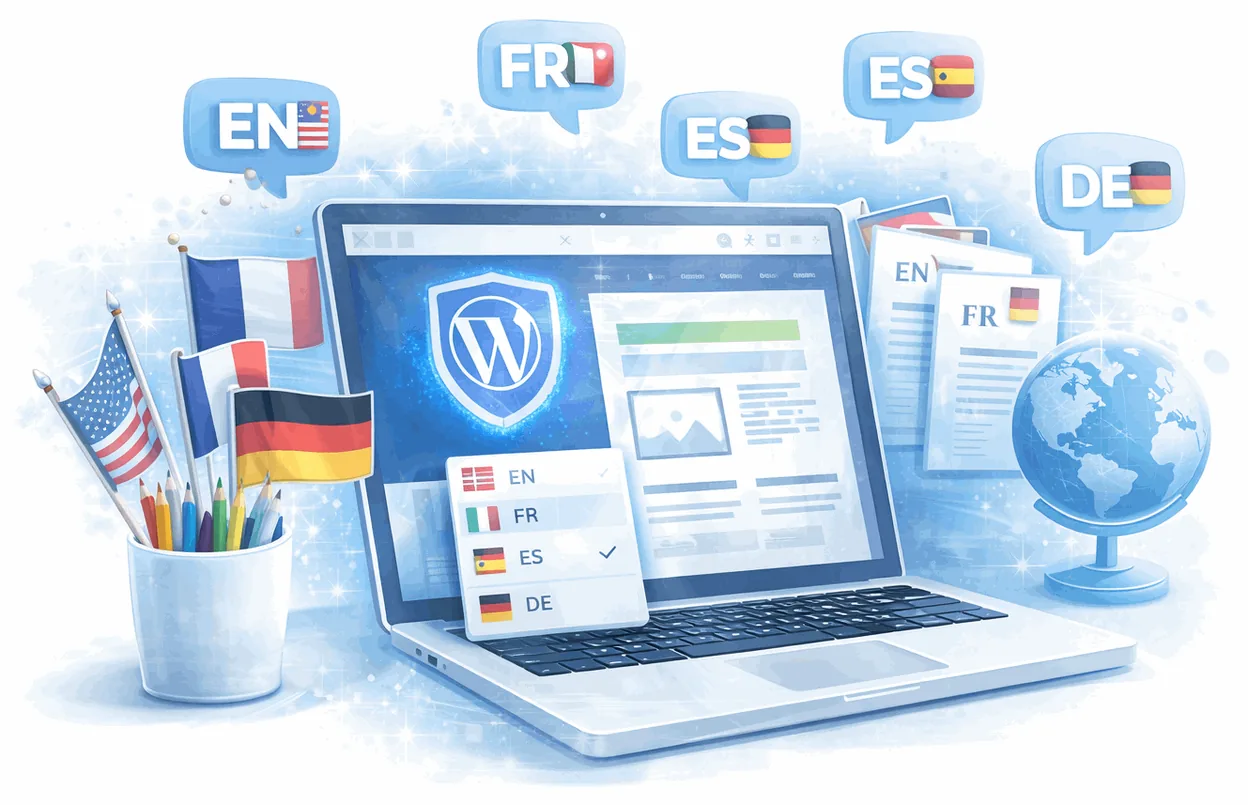
Bilingual WordPress development makes your site usable in English and French, with correct hreflang. For government bodies and organizations under the Official Languages Act, EN/FR is a compliance requirement, not a feature. I set up WPML or Polylang on an architecture planned before any plugin is installed, as I did for Great-West Life and the Ministry of Education Ontario.
What Are the Benefits of Bilingual & Multilingual WordPress Development?
EN/FR Bilingualism Is a Legal Requirement, Not a Nice-to-Have
Toronto’s population speaks 200+ languages, with 51% of residents using a non-official language at home. For any organization operating nationally, serving Quebec, or working with federal or provincial government - bilingual WordPress capability is a compliance question before it is a technical one.
Most Multilingual WordPress Implementations Fail at the Architecture Stage
The common failure points are not obscure edge cases - they are permalink mismatches, hreflang tags that register as duplicate content rather than language variants, and content relationships that break when a plugin updates. These are problems that show up six months after launch, not on the day the site goes live, because the configuration work was rushed to get to the visible parts of the build.
The Decision That Determines Whether Your Network Scales or Accumulates Debt
Most organizations approach this as a plugin selection question. It is actually an architecture question - and the right answer depends on your content model, editorial workflow, hosting infrastructure, and compliance requirements. I will advise honestly on which approach fits your situation before any configuration begins.
Every Engagement Includes
Every engagement is fully documented before and after build - network architecture, WPML configuration, URL structure decisions, hreflang output, and user role mapping across all subsites. You receive a document you can hand to any developer who works on the site after me.

Architecture First - Always
WPML multilingual projects that fail do so because configuration decisions are made during build rather than before it. The hosting infrastructure question, the subdomain vs. subdirectory question, and the WPML URL structure question are all decisions that cannot be changed after launch without a rebuild. I make them before the first line of configuration is written.

Enterprise Add-Ons and Related Services
Complex editorial teams often need more than WPML configuration. A custom status workflow plugin maps your actual approval stages across EN/FR variants - the same approach used for the Ministry of Education Ontario. Relevanssi replaces WordPress search with relevance-ranked results that work correctly across multilingual language variants. WooCommerce Multilingual handles currency, pricing, and checkout flow across language markets for multi-region e-commerce.
How Does My WordPress Multi-Language Integration Process Work?
Architecture Workshop
I map your content structure, user roles, subsite requirements, language needs, and hosting infrastructure before planning the technical configuration. This produces a written architecture document that prevents a rebuild six months later because the permalink structure was wrong at launch.
Hosting & Infrastructure
WPML requires proper server and plugin configuration that will not collapse under network-scale write operations. I specify the hosting environment before setup begins.
Network Build
Network core built first: network admin settings, user role mapping across subsites, plugin activation rules, and theme deployment. This is the foundation everything else depends on.
WPML Configuration
Language pairs, URL structure, hreflang tag output, string translation setup for theme and plugin text. This is where the Great-West Life Lifeco build spent most of its time. The configuration work is what makes everything else work correctly.
What Should You Know About Bilingual & Multilingual WordPress Development Toronto?

The Editorial Team Decides Whether the Build Works
A bilingual WordPress implementation can be technically correct and still fail. It fails when the editorial team cannot use it without a developer present. When updating the English version without affecting the French one requires a workaround the team discovers six months into content production.
At the Ministry of Education Ontario, the editorial team picked up the Compass system in under an hour. The bilingual file association was built around how they actually worked - which required understanding their workflow before writing a single line of code. The implementation that works is the one the editorial team uses confidently, indefinitely, without workarounds.

The Infrastructure Decision You Cannot Undo After Launch
Multisite networks built on shared hosting have a specific failure mode: they work correctly at launch and degrade as the network grows. The database structure that handles 3 sites handles 30 differently. The server resources allocated for one site's traffic are not available to all sites under peak load unless the hosting is configured for it.
The subdomain versus subdirectory decision affects more than URL structure. It affects how server-level redirects work, how SSL certificates are managed, and in WPML implementations, how language variants are attributed in Google Search Console. I make these decisions before the first site in the network is configured, with documentation that explains the rationale. Changing them after launch means a rebuild.
Where Most WPML Implementations Break SEO
A hreflang implementation that is technically present but structurally incorrect is worse than no hreflang at all. Google interprets incorrect hreflang tags as duplicate content signals. The French version of a page that should be ranking for FR-CA queries gets flagged as a near-duplicate of the English version and suppressed in both.
Common failure patterns: hreflang output missing the x-default tag, language variants not linking back to each other bidirectionally, URL structures changed from subdirectory to subdomain before launch without updating WPML's language URL settings. I validate hreflang output against Google's specifications before the site goes live, using Google Search Console URL Inspection to confirm both language versions are indexed correctly - not assumed.
What Is Included in Bilingual & Multilingual WordPress Development?

Network Architecture Document
Written specification covering subsite structure, domain mapping strategy, user role architecture, shared plugin framework, language configuration, and hosting infrastructure requirements - produced and approved before any configuration begins.
Full WPML Configuration
Subdomain or subdirectory architecture, wildcard DNS and server-level configuration, network-wide plugin and theme management, and a staging network instance that mirrors production - not a plugin-based staging tool.

User Role Architecture
Network admin, site admin, editor, and contributor roles mapped correctly across subsites with documented update and maintenance workflows so your internal team can operate the system without calling me for every change.

WPML Language Configuration
Language pair setup, hreflang tag implementation and validation via Google Search Console, localized URL structure configuration, and string translation setup for theme and plugin text outside the CMS. Bilingual editorial teams configured to translate directly inside the CMS - no external file exports.

WooCommerce Multilingual Setup
WooCommerce Multilingual configuration for e-commerce across language markets - currency and pricing per language variant, checkout flow validation across all language paths, WPML compatibility testing across all active plugins.
Content Migration
Moving from separate WordPress installs into a unified network: mapped import process, not a bulk export-import that drops custom field data. Map the data structure first, migrate in staging, validate, then go live. The methodology used for Canada Life and London Life.
Which Add-Ons Are Available for Bilingual & Multilingual WordPress Development?
Enterprise and complex implementations typically include the following, scoped explicitly during discovery:
Custom Status Workflow Plugin
For bilingual editorial teams, off-the-shelf approval workflows do not match real processes. I build custom status workflow plugins mapped to your actual editorial approval stages - the same approach used for the Ministry of Education Ontario’s EN/FR content approval system.
Relevanssi Advanced Search
Relevanssi replaces WordPress’s default search with relevance-ranked results that work correctly across WPML multilingual language variants. Used on the Ministry of Education Ontario Compass app - bilingual search is a different configuration challenge from single-language search.
WP Multi Network Configuration
For organizations requiring truly independent networks under a single WordPress installation - separate network admin credentials, isolated plugin and theme sets per network, strict brand separation between subsites.
Professional Translation Integration
WPML Translation Management configured to connect directly to your preferred professional translation service or in-house translation team.
n8n Automation Integrations
80+ custom n8n automations delivered connecting WordPress networks to CRM systems, marketing automation platforms, and internal tools. If your multilingual site needs to talk to Zoho CRM, HubSpot, or a proprietary internal system, that is solvable without involving a second developer.
Retainer-Based Network Maintenance
Monthly maintenance covering all subsites simultaneously: plugin updates tested against your WPML configuration, compatibility checks as WordPress core updates, and string translation maintenance as your content evolves.
Additional Language Variants
Add a third language (e.g. French + Spanish for federal organizations) after initial build, including URL structure extension, hreflang configuration, and editorial workflow training.
What Results Have Enterprise Clients Seen?
Great-West Life - Lifeco, Canada Life, London Life
Great-West Life - Lifeco, Canada Life, London Life: Great-West Life needed full WPML multilingual implementation before the WordPress-to-Adobe Experience Manager migration could happen. Language pairs configured, hreflang tag output validated, localized URL structures set, editorial workflow configured for a team managing content across one of Canada’s largest insurance groups. After WPML was solid, I architected the migration path to AEM. Canada Life followed. London Life followed. Three migrations, same disciplined approach - years of structured content transferred cleanly, no data loss, no broken internal links. The playbook worked the second and third time because the architecture was right the first time.
Ministry of Education Ontario - Bilingual Editorial CMS
Ministry of Education Ontario - Bilingual Editorial CMS: The Ministry did not need a translation plugin. They needed a bilingual content management system that matched how their editorial team actually worked - internal approval stages, file associations, status tracking across EN/FR variants. I built a custom status workflow plugin that mapped to their real process, not a simplified version of it. Provincial government. Compliance requirements on both language sides. The Compass newsletter app ran on that system. Their internal teams picked it up without a training session longer than an hour. That is how you know the architecture matched how people actually work.
Rogers, Sportsnet, Chatelaine
Rogers, Sportsnet, Chatelaine: Media properties managed under a unified WordPress operation that had to hold under Canadian media-scale traffic. These are not logos on a portfolio page - they are organizations with internal IT teams, change management processes, and real consequences when something breaks.
Frequently Asked Questions About Bilingual & Multilingual WordPress Development Toronto
WPML is the industry standard for enterprise bilingual and multilingual WordPress installations. It handles content relationships between language versions, integrates with WooCommerce, and has the deepest compatibility with major themes and plugins. Polylang is a lighter alternative suitable for simpler sites. For Canadian organizations with EN/FR compliance requirements, complex editorial workflows, or WooCommerce, WPML is the correct choice. I have implemented WPML at scale for Great-West Life across Lifeco, Canada Life, and London Life, and for the Ministry of Education Ontario.
WPML manages true content translation across 65+ languages with proper hreflang tags so your English and French content registers as distinct language variants in Google - not duplicate content. That configuration was non-negotiable for the Ministry of Education Ontario. Their EN/FR system had to be fully compliant, not just technically bilingual. Off-the-shelf setup was not going to get there. I built it to match their actual editorial workflow, including the internal approval stages.
An incorrectly configured WPML installation adds unnecessary database queries on every page load. Properly configured - with appropriate caching, database optimization, and query reduction - the performance impact is minimal. The configuration work required to get WPML performing well is exactly what most developers rush past. I do not. Clients moving from poorly configured WPML installations to properly architected ones consistently report faster page load times after the remediation.
Projects range from $5,000 to $15,000 based on complexity. WPML configuration on an existing site typically takes three to four weeks. A full multilingual build with content migration typically runs six to ten weeks. Most organizations reach ROI within four to six months through reduced maintenance overhead and revenue from newly accessible language markets.
Yes. I have built 80+ custom n8n automations connecting WordPress networks to CRM systems, marketing automation platforms, and internal tools. If your multilingual network needs to talk to Zoho CRM, HubSpot, or a proprietary internal system, that is a solvable problem - without involving a second developer.
Enterprise multilingual work at this scale is rare. I led WPML implementation for Great-West Life across three brands, followed by the full migration to Adobe Experience Manager. I built the bilingual editorial system for the Ministry of Education Ontario. These are organizations where a misconfigured network is a compliance event, not an inconvenience. You are not paying for my learning curve.
Yes. Any live multilingual network needs ongoing attention: plugin updates tested against your WPML configuration, compatibility checks as WordPress core updates, and string translation maintenance as your content evolves. I offer retainer-based network maintenance for exactly that. Proactive maintenance costs less than reactive firefighting when a plugin update breaks a bilingual content relationship on a publicly-traded company’s corporate site.
Need a WordPress platform that serves multiple sites and languages - built to hold up?
Tell me about your network requirements: how many sites, which language variants, what your compliance obligations are, and what your editorial team’s workflow looks like. I will respond within one business day with a candid assessment of the right architecture and what the project would involve.Architecture starts with a conversation, not a configuration. Twenty years of enterprise delivery behind the answer.
Beyond client projects, I'm also co-founder of HYPESTUDIO.
It's a separate AI automation agency (not a WordPress service) building workflows, agents, and systems for growing businesses.
Visit HYPESTUDIO.orgAI automation, integrations & growth systems